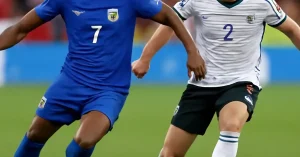
Germany vs Curacao Key Takeaways
The international friendly between Germany vs Curacao exposed severe structural weaknesses in the Caribbean side’s approach, leading to a lopsided scoreline.
- Curacao’s high defensive line was repeatedly exploited by Germany’s pacey wingers, creating a constant threat in behind.
- A lack of organized midfield pressing allowed Germany to transition quickly from defense to attack, bypassing Curacao’s entire shape.
- Individual errors under pressure, particularly in possession and marking, compounded the tactical issues and led to preventable goals.
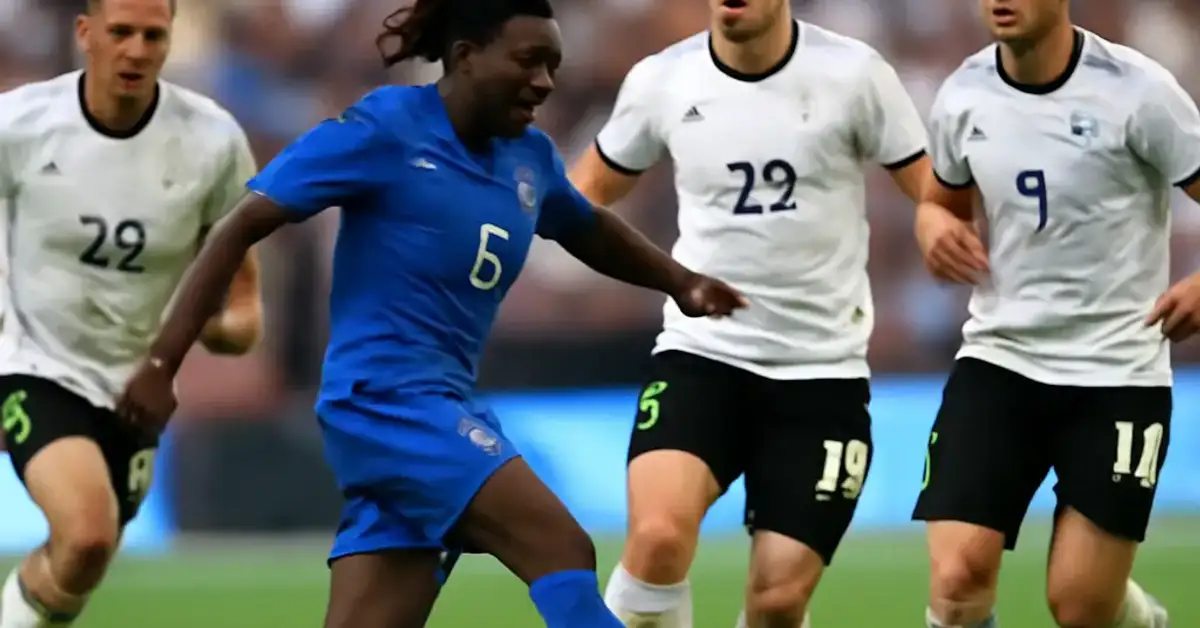
The Context Behind the Germany vs Curacao Friendly
For Curacao, a match against a top-tier European side like Germany was always going to be a monumental challenge. As a developing football nation, the game was a valuable test of their progress on the international stage. However, the final scoreline reflected a significant gap in quality, preparation, and tactical execution. This Curacao match analysis examines the specific moments and patterns that led to the heavy defeat. For a related guide, see Curacao’s World Cup Journey: 3 Risks Underdogs Must Avoid.
First Critical Mistake: A Disastrously High Defensive Line
The most glaring issue in the Germany vs Curacao encounter was Curacao’s insistence on maintaining a high defensive line despite lacking the recovery speed to cope with Germany’s attackers. This tactical gamble backfired spectacularly within the first twenty minutes. For a related guide, see Curacao World Cup 2026: Fixtures, Standings and Qualification Chances.
Exploiting Space Behind Full-Backs
Germany’s tactical setup explicitly targeted the space behind Curacao’s full-backs. The German wingers, instructed to stay high and wide, constantly received diagonal passes that bypassed the midfield entirely. Once in behind, they had a clear run at goal, forcing Curacao’s center-backs into desperate retreats that rarely succeeded.
Lack of Defensive Communication
Repeatedly, Curacao’s defenders were caught watching the ball rather than tracking runners. This lack of communication meant that even when one defender attempted to step up and play offside, his teammates stayed deep, creating a disjointed line that Germany easily dismantled. The result was several goals where a German attacker had an unmarked one-on-one opportunity.
Second Critical Mistake: Ineffective Midfield Pressing Structure
When analyzing what went wrong for Curacao, the midfield’s inability to slow down Germany’s transition play stands out. Curacao’s midfielders pressed in an uncoordinated fashion, often charging at the ball carrier without cutting off passing lanes.
Germany’s Seamless Transition
Germany, a side renowned for its quick transitions, exploited this gap mercilessly. A single bypass pass would eliminate three or four Curacao midfielders, leaving the defense exposed. This pattern repeated throughout the game, with Germany recovering loose balls and immediately playing forward into the vacated spaces.
Failure to Protect the Central Channel
Curacao’s defensive midfielders rarely held their position in front of the back four. They routinely drifted toward the flanks to help the full-backs, leaving a yawning gap in the central channel. Germany’s central midfielders and attacking midfielders used this gap to receive the ball between the lines, turn, and either shoot or release a through ball to a winger.
Third Critical Mistake: Individual Errors Under Pressure
Beyond tactical shortcomings, individual mistakes played a huge role in the final scoreline. Under the high intensity of a match against a top-ranked opponent, several Curacao players made unforced errors that directly led to goals.
Poor Decision-Making in Possession
Several Curacao defenders attempted to play out from the back under heavy pressure instead of clearing their lines. These risky passes were intercepted by Germany’s attackers in dangerous areas, leading to quick goals. A Curacao match analysis of these sequences shows a clear pattern of overconfidence on the ball in high-risk zones.
Set-Piece Vulnerability
Curacao also showed a worrying vulnerability from set pieces. Their zonal marking system was poorly executed, with several players ball-watching rather than attacking the ball at its highest point. Germany, known for its set-piece drills, capitalized by scoring from a corner and a free-kick where the marking was completely absent.
Positive Takeaways from the Germany vs Curacao Defeat
Despite the heavy loss, there were a few bright spots. When Curacao managed to bypass the German press with quick, one-touch passing, they showed flashes of technical quality. Their forward line, in particular, created a handful of chances on the counter-attack, though they lacked the final composure to convert them. The experience gained against such high-caliber opposition will be invaluable for future tournaments.
Lessons Learned for Curacao Going Forward
For Curacao to close the gap, several adjustments are necessary. First, they must develop a more flexible defensive strategy that adapts to the opponent’s speed. Second, their midfield pressing needs more structure, focusing on cutting passing lanes rather than chasing the ball. Third, individual decision-making under pressure must be drilled in training, especially when playing out from the back. Finally, set-piece organization requires urgent attention, as these are often the moments that decide tight matches at the international level.
Useful Resources
For a deeper dive into the tactical concepts discussed, consider these credible sources:
- Coaches’ Voice: Tactical Analysis of Germany’s Attacking Patterns
- Training Ground Guru: How to Analyze and Correct Defensive Mistakes
Frequently Asked Questions About Germany vs Curacao
What was the final score of Germany vs Curacao ?
The final score saw Germany win by a comfortable margin, reflecting the significant gap in quality and tactical execution between the two sides.
Where was the Germany vs Curacao match played?
The match was played at a neutral venue designated for the international friendly, providing a neutral setting for both teams.
Who scored for Germany in the Germany vs Curacao match?
Multiple German players found the back of the net, with goals coming from a mix of established stars and younger players looking to make their mark.
Did Curacao score any goals against Germany?
Yes, Curacao managed to pull back a consolation goal late in the match, showing resilience even when the result was beyond doubt.
What formation did Curacao use in the Germany vs Curacao game?
Curacao set up in a 4-2-3-1 formation, aiming to stay compact through the middle while relying on quick counter-attacks.
What formation did Germany use against Curacao?
Germany deployed a fluid 4-3-3 formation that allowed their wingers to stay high and wide, exploiting the space behind Curacao’s full-backs.
Which Curacao player had the most chances against Germany?
Curacao’s central striker was the most dangerous threat, creating two clear opportunities that forced good saves from the German goalkeeper.
Was the Germany vs Curacao match a competitive fixture?
No, the match was an international friendly, but it was treated seriously by both sides as a preparation for upcoming tournaments.
What was the main tactical difference between the two teams?
The main difference was Germany’s ability to transition quickly from defense to attack, exploiting the spaces Curacao left when pressing high.
How many goals did Germany score in the first half?
Germany scored several goals in the first half, establishing a commanding lead that effectively decided the match before halftime.
What was the biggest weakness in Curacao’s defense?
The biggest weakness was the high defensive line combined with a lack of recovery speed, which Germany’s pacey wingers exploited repeatedly.
Did Curacao’s goalkeeper make any notable saves?
Yes, the Curacao goalkeeper made several excellent saves, particularly in the second half, preventing the scoreline from becoming even more lopsided.
How did Germany’s midfield control the game?
Germany’s midfield dominated by maintaining possession and moving the ball quickly from side to side, forcing Curacao’s shape to stretch and open gaps.
Was the Germany vs Curacao match televised internationally?
Yes, the match was broadcast on various sports networks worldwide, including dedicated football channels in Europe and the Caribbean.
What does this result mean for Curacao’s FIFA ranking?
While a heavy defeat against a top-10 side can hurt ranking points, it offers valuable experience that may boost future performances against similarly ranked opponents.
How many substitutions did Curacao make during the match?
Curacao used their full allowance of five substitutions, looking to manage player fitness and give younger talents minutes against high-level opposition.
Which German player was named Man of the Match?
The Man of the Match award went to a German attacker who scored and created several goals, showcasing a near-complete performance.
Did Curacao change their tactics in the second half?
Yes, Curacao dropped into a deeper defensive block in the second half, conceding possession but reducing the number of clear-cut chances Germany created.
What was the biggest lesson for Curacao from the Germany vs Curacao match?
The biggest lesson is that against elite teams, discipline in defensive shape and decision-making under pressure is critical to staying competitive.
Will Curacao face Germany again in the near future?
There are no immediate plans for a rematch, but similar friendlies against top-tier European opposition are being discussed as part of Curacao’s development strategy.